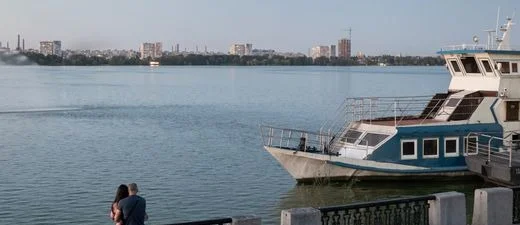
Ukraine’s Dnipro River, a profound national symbol, now serves as a critical front line in the ongoing conflict. This waterway, celebrated in song and poetry, flows directly through the country’s heart. Indeed, it embodies the spirit of Ukraine itself, often likened to an ancient Cossack dreaming of past glories.
Historically, the Dnipro holds immense cultural significance. Its depiction in the national anthem speaks of future joy returning to Ukraine. Moreover, it is the largest river in the country, deeply woven into the nation’s cultural fabric.
Strategically, the Dnipro presents Russia’s invading forces with their greatest natural obstacle. It cuts a path from the Belarusian border in the north to the Black Sea in the south. Russian troops, under Vladimir Putin, only briefly managed to cross it early in the war. However, they were soon forced to retreat from the west bank.
Consequently, the Dnipro’s lower reaches have since defined the front line. This division separates Russian-occupied territory from free Ukraine. The river, once a backbone of the nation, now threatens to become a permanent border.
A recent journey along Ukraine’s Dnipro River revealed both its enduring identity and the devastating scars of war. The expedition sought to document life along its banks. It traversed areas from relative calm to intense conflict zones.
The journey began in Demydiv, in the north, where Ukrainian forces repelled Russia’s advance on the capital in 2022. It then led through towns and villages where residents strive to maintain a semblance of normal life. Meanwhile, everyday struggles intensify significantly closer to the front lines.
Ultimately, the journey concluded in Kherson, a port city described as the heart of darkness. Here, drones relentlessly hunt pensioners. Remote-controlled ground robots patrol deserted streets, painting a stark picture of the ongoing devastation.