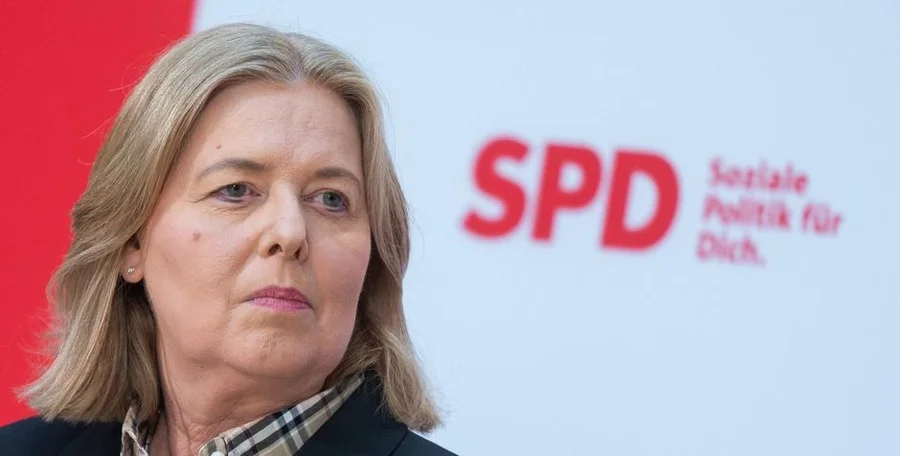
The sudden resignation of Germany’s Labor Minister, Bärbel Bas, has severely deepened existing cracks within the federal coalition government. This high-profile departure occurred on Monday morning, sending shockwaves through Berlin’s political circles. The German labor minister had been under increasing scrutiny for months.
Ms. Bas also stepped down from her role as Co-Chair of the center-left Social Democratic Party (SPD). She cited profound personal grief following her stepdaughter’s death as a primary reason. However, she also highlighted “public attacks” as a contributing factor, notably including criticism from within the ranks of her own coalition partners.
Pressure on the former labor minister had intensified significantly in recent weeks. The centrist government coalition urgently awaited crucial legislative proposals from her ministry. For instance, comprehensive pension reform plans, presented by a commission in July, remained stalled without final drafts.
Christian von Stetten, a CDU/CSU parliamentary group leader, fiercely criticized Bas in September. He argued the minister was “no longer tenable” and accused her of blocking vital reforms. Subsequently, CDU Economy Minister Katherina Reiche demanded swift passage of pension reforms by year-end, despite Bas’s known personal difficulties.
Lars Klingbeil, SPD co-leader and Finance Minister, sharply condemned these political attacks on Monday. He labeled them “disgraceful,” speaking after an SPD leadership meeting in Berlin. Mr. Klingbeil urged politicians to reflect, warning against “poisoning the political discourse.”
Such accusations carry significant weight, especially as the coalition is already grappling with a deep crisis. Furthermore, Ms. Bas’s departure creates a new leadership vacancy at the top of the SPD. Mr. Klingbeil now leads the party alone, with his own leadership future uncertain after a poor re-election result.
Alexander Schweitzer, former state premier of Rhineland-Palatinate, will succeed Bas as Federal Minister of Labor. Chancellor Friedrich Merz expressed confidence in Schweitzer’s experience. He hoped pending legislative proposals would “now be quickly approved” and introduced to parliament. Meanwhile, the Chancellor refuted Bas’s accusations of personal attacks, stating he had advised her to take time to grieve.
However, mistrust between the coalition partners has noticeably increased. SPD lawmakers describe an increasingly toxic political climate. Both the CDU and SPD have struggled for months with low poll numbers and disappointing election results.
Disputes plague key reform projects across various sectors. For example, changes to electricity tax, a sugar tax, and both pension and labor market reforms face public controversy. Little progress has occurred without significant public debate.
The Chancellor’s CDU party also faces internal turmoil. It suffered a historic defeat in Mecklenburg-Western Pomerania in September, losing state parliament representation for the first time. Following a closed-door leadership session, the party issued a four-page document indicating a strategic shift. They now emphasize social issues like affordable housing and lower electricity prices, moving beyond purely economic concerns.
Chancellor Merz acknowledged voters feel politicians overlook their hardships and fears of social decline. “We have to work our way out of this slump,” he stated, referring to a “crisis of confidence.” He promised to lower the electricity tax for everyone, a pledge made but unkept before the 2025 general election.
This document also signals to the SPD a willingness to re-engage on traditional social values. Despite deep rifts, Chancellor Merz emphasized his commitment to the current government. He stated that personnel changes would “not call into question the basis of the coalition agreement.” Both the CDU/CSU and SPD understand that early elections could boost the far-right AfD, which currently leads national polls. Therefore, despite their differences, no alternative to their coalition currently exists.