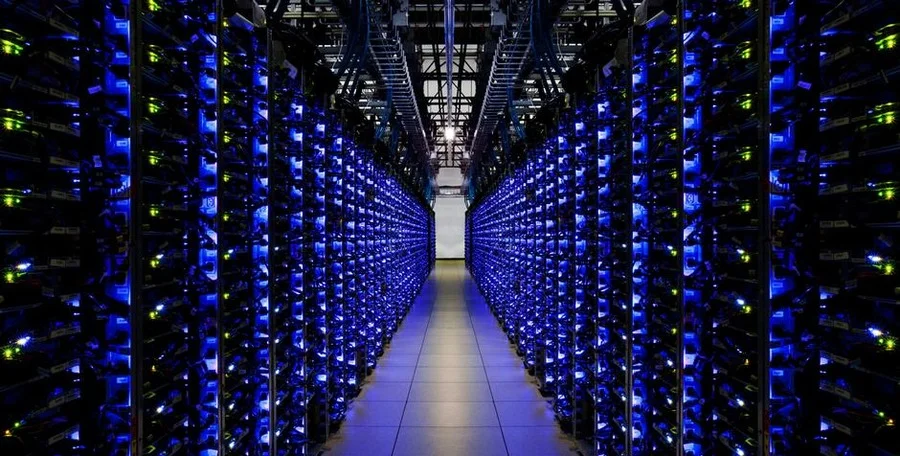
The growing demand for artificial intelligence (AI) is significantly amplifying the data center impact on global resources. These facilities, essential for every AI query, require substantial physical infrastructure. They consume vast amounts of energy, water, and land. Researchers from the United Nations University estimate that data centers, if a country, would rank as the world’s 11th largest electricity consumer.
Indeed, data centers are among the world’s fastest-growing electricity users. These server warehouses operate around the clock. Continuous cooling systems prevent overheating. For example, in Frankfurt, Germany, data centers consume approximately 41% of the city’s electricity. The grid there is now so saturated that new connections are unavailable until at least the 2030s. Dublin experiences double that consumption.
The International Energy Agency predicts data center electricity use will double by 2030. This will reach about 945 terawatt-hours, matching Japan’s annual consumption. Such immense energy needs often rely on fossil fuels. A 2024 study revealed over half of U.S. data centers use fossil fuels. This results in more than 105 million tons of CO2 emissions. Offsetting this would require over 31,000 wind turbines operating for a year.
Moreover, the rapid build-out delays coal plant retirements. Fifteen coal-fired plants nationwide, emitting nearly 65 million tons of greenhouse gases in 2023, have seen their closures postponed. New gas-fired power plants are also under construction. Over 100 GW of additional facilities have already been announced across the U.S. This will lead to further carbon emissions.
Renewable energy offers a cleaner alternative for data centers. On-site renewables can reduce local grid pressure. Any surplus energy can even be sold back to the grid, enhancing stability. However, diverting green electricity to data centers means less is available for electrifying transport or decarbonizing other heavy industries.
Water consumption presents another critical aspect of the data center impact. Millions of gallons are used for cooling. Servers generate constant heat, and water evaporation effectively dissipates it. A single large facility can consume up to 5 million gallons daily, comparable to a town of 10,000 to 50,000 people. Approximately 80% of this water simply evaporates. The remaining wastewater can overwhelm local treatment systems.
Northern Virginia, the world’s data center capital, houses nearly 300 facilities. Collectively, these centers used almost 2 billion gallons of water in 2023. Fortunately, more efficient cooling methods exist. Immersion cooling, where devices are bathed in a coolant, is one option. Closed-loop systems also recycle water, cutting freshwater use by up to 70%.
Cooling also moves heat into the surrounding environment. This exacerbates the urban heat island effect, making cities hotter than rural areas. Researchers in Phoenix, Arizona, found a single large data center can emit as much waste heat as hundreds of thousands of households. This raises nearby land temperatures by up to 9 degrees Celsius. Air temperatures can increase by 2 degrees Celsius, with effects felt half a kilometer away.
Some data centers are now capturing this waste heat. They pipe it into nearby homes and businesses via thermal energy networks. This innovative process can reduce the facility’s power demand by up to 30%. Air pollution is a significant concern on two fronts. First, coal and gas plants release toxic particulate matter. This contributes to respiratory and heart diseases in nearby communities.
Second, on-site diesel generators, used for backup power, emit harmful pollutants. These generators pump out 200 to 600 times more nitrogen oxides than natural gas plants. An estimate suggests Virginia’s data center backup generators, at just 10% of their permitted level, could lead to 14,000 asthma cases, over a dozen deaths, and up to $300 million in public health costs annually.
Finally, data center construction requires extensive land. Repurposing natural and agricultural areas disrupts ecosystems and threatens biodiversity. In Hattersheim, Germany, an 18-acre green space for agriculture was rezoned for a five-building data center campus in 2024. Moreover, supporting infrastructure like gas pipelines and power plants further fragments habitats. It also erodes soil along their routes. Therefore, the rapid expansion of AI-driven data centers presents multifaceted environmental challenges that demand urgent attention.