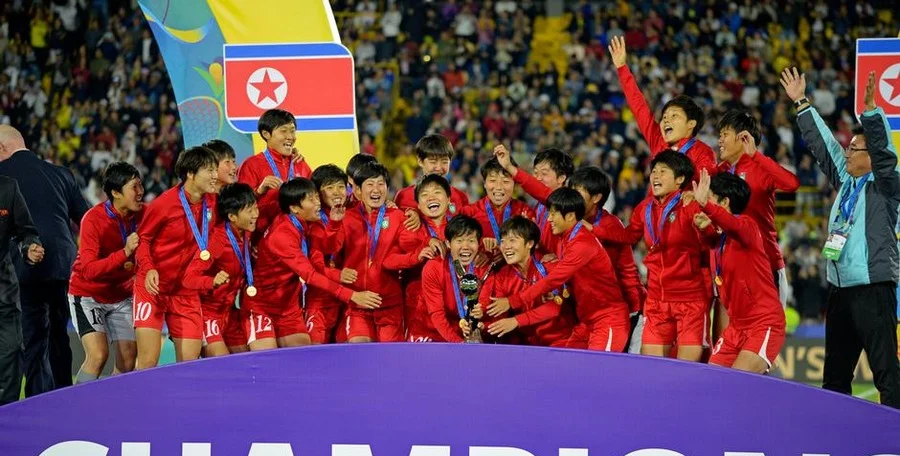
North Korea’s remarkable youth football success continues to astound the international community. The nation’s U-20 women’s team arrives at the World Cup in Poland as reigning champions, having secured their third title in 2024. Just a year prior, their U-17 squad successfully defended its World Cup title in Morocco, marking their fourth victory in that age category. These achievements solidify North Korea’s dominance in women’s youth football.
However, many observers question how an isolated state, described by the United Nations as unparalleled, can achieve such sporting prowess. Dr. Jung Woo Lee, a senior lecturer at the University of Edinburgh, offers insight. He explains that international sport serves as a crucial platform for North Korea to assert its sovereignty and identity globally. Such victories allow the nation to prominently display its flag before an international audience.
Moreover, domestically, sports victories are a powerful propaganda tool. The regime uses them to glorify its leaders and showcase the country’s perceived greatness. Recognizing the significant gap in senior-level football, North Korea strategically focused on women’s youth football. This area presented a more manageable path to success.
The strategy prioritizes winning at this level, rather than developing pathways to senior teams. Dr. Lee highlights a key difference in training methodologies. European sport organizations often emphasize enjoyment in youth football. By contrast, North Korean athletes, even as young as 13 or 14, enter highly disciplined, systematic, and professionalized training regimes. This intense early development helps them excel.
Their on-field performance reflects this rigorous training. In Morocco, the U-17 team conceded only three goals throughout the tournament, while scoring three or more on four occasions. The U-20 women in 2024 also showcased formidable skill, beating Argentina 6-2 and then securing three consecutive 1-0 victories from the quarterfinals onward to win the tournament. The Pyongyang International Football School plays a vital role, selecting and developing young girls through a scientific and disciplined approach.
Beyond national pride, the communist regime views these victories as a testament to its system’s superiority. Dr. Lee notes that state media often contrasts the unwavering will of its athletes with the perceived fragility of those in capitalist systems. This psychological edge, where determination overrides physical exhaustion, is framed as a hallmark of their system.
Furthermore, life-changing rewards motivate these young players. While many North Koreans face hardship, life in Pyongyang offers significantly better conditions. Winning international titles can grant players from outside the capital a coveted residence certificate for Pyongyang. Many also receive apartments, effectively winning a life’s lottery away from rural scarcity. This strong incentive fuels their ambition.
Nevertheless, a future in international leagues like the WSL or NWSL remains challenging for star players. Economic sanctions on North Korea pose a significant barrier. Additionally, past instances involving North Korean athletes in European leagues saw salaries directed to government accounts, not individual players. Therefore, the consistent North Korea youth football success, while remarkable, remains deeply intertwined with the country’s unique political and economic landscape.