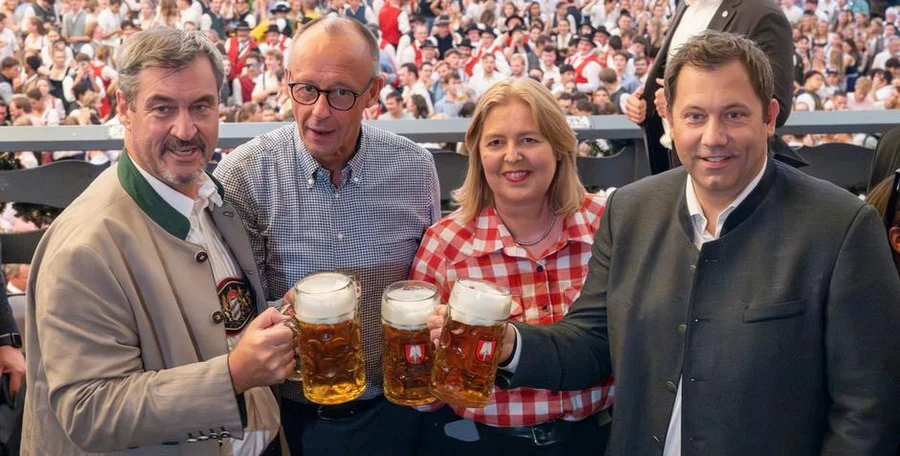
Concerns are mounting over the stability of the Merz government in Germany. Conservative parties are intensifying pressure on their center-left coalition partners. They demand swift progress on long-promised pension and labor market reforms.
Chancellor Friedrich Merz’s Christian Democrats might block a Social Democrat-backed tax reform. This escalating political friction has sparked fears of a potential coalition collapse. Indeed, President Frank-Walter Steinmeier reportedly intervened earlier this week due to significant concerns.
Government officials, however, deny any crisis. They insist the administration remains fully functional. They also highlight recent cabinet agreements as proof of constructive cooperation.
Meanwhile, the automotive giant Volkswagen is grappling with a major industrial dispute. Its latest cost-cutting drive has triggered outrage from the IG Metall union. The union accuses management of disrespectful handling after it announced plans to scrap key labor agreements.
Volkswagen plans to eliminate an additional 50,000 jobs globally. Several German plants, including Emden, Hannover, Zwickau, and Neckarsulm, face an uncertain future. Union representatives are prepared for a prolonged conflict.
In other news, German police executed a major operation targeting far-right music. Investigators seized around 33,000 recordings and €2 million in assets. Raids occurred across Germany and several other European countries.
Deutsche Bahn, the national rail operator, continues to face performance issues. Nearly half of its long-distance trains arrived late in September. Extensive construction and infrastructure failures are largely to blame.
Department store chain Galeria has filed for insolvency for the fourth time in six years. This move jeopardizes approximately 12,000 jobs. The Verdi trade union attributes the crisis to severe management missteps.
Germany’s economic recovery, while showing some improvement, remains fragile. The foreign trade association BGA warns that bureaucracy significantly hinders business operations. Furthermore, the labor market has yet to see positive shifts, with many companies still planning job reductions.
Amidst these developments, German Unity Day celebrations were held in Bremen. Chancellor Merz and other leaders attended initial events. However, separate protests occurred in Bremen and Berlin, opposing state policies and potential military service.