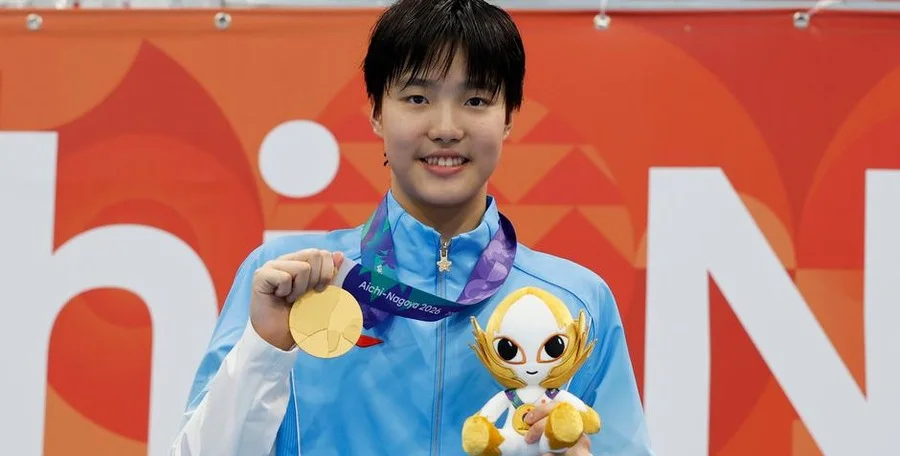
China’s teenage swimming sensation, Yu Zidi, has captivated sports fans. The 13-year-old recently secured three gold medals. She also shattered three Asian Games records. This remarkable performance has ignited a wider debate. Specifically, it questions the participation of very young athletes at elite levels.
Yu’s third gold medal in the women’s 400-meter individual medley was particularly convincing. She added this title to her earlier victories. These included the 200-meter medley and 200-meter butterfly. The young swimmer also earned a bronze at last year’s World Championships.
Her rapid ascent draws comparisons with Canada’s Summer McIntosh, 20. McIntosh herself competed at 14 in the 2020 Olympics. Leonie Beck, a three-time open water world champion from Germany, voiced immediate concern. She highlighted the immense pressure placed on such young talents.
Beck emphasized that early success is not always sustainable. She noted, “Just because you’re really good and fast at this age, doesn’t mean that your whole career will continue like this.” Beck, who retired at 29, acknowledged the sport often sees athletes peak young.
Reaching this level demands extraordinary dedication. Yu herself began swimming training seriously after being discovered at age six. Her rigorous schedule led to exhaustion. She once admitted, “Sometimes I was so tired I could fall asleep even while eating.”
Therefore, robust support structures are crucial. Beck advocated for educational, physical, and mental support for under-18 competitors. “Sport psychology should start at a really young age,” she stated. This would ensure sport remains enjoyable.
World Aquatics rules set a minimum age of 14 for international championships. However, exceptions exist for exceptional talents like Yu. Historically, young athletes have excelled. Examples include gymnast Nadia Comaneci at 14 and footballer Lamine Yamal at 16. Dimitrios Loundras remains the youngest Olympic medalist, competing in 1896.
Despite improving support, challenges persist. Rosemary Purcell of the International Olympic Committee (IOC) noted concerning trends. Some sports show higher rates of eating disorders in young athletes. However, they may also experience lower rates of depression.
Sporting bodies generally adopt an “if you’re good enough, you’re old enough” philosophy. Beck supports this, with proper safeguards. She argued against restricting young talent simply due to age. This approach allows for individual developmental differences.
Nevertheless, a critical aspect involves preparing athletes for life after sport. Beck highlighted her own struggle post-retirement. Athletes need a clear path once their competitive career ends. “The sport is not endless,” she concluded, urging focus on a well-rounded future for any teenage swimming sensation.