Two days after state elections, the political landscape in Berlin faces uncertainty, particularly concerning Berlin coalition talks involving Die Linke. The party achieved a significant victory, securing 25.7 percent of the vote. This result marks twice its performance from 2023.
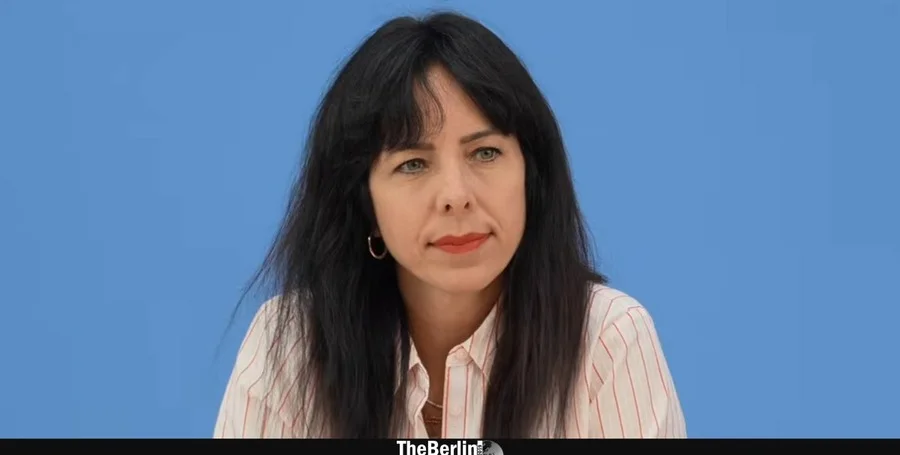
However, the path to governance for Die Linke remains challenging. Their top candidate, Elif Eralp, a 45-year-old lawyer, aims to become the first Governing Mayor from her party. The party’s executive board has recommended exploratory discussions with the SPD and the Greens.
A party convention on Friday, September 25th, will finalize this decision. If approved, talks could commence next week. The Greens have already indicated their readiness to participate.
In Berlin, the CDU finished with 18.8 percent, followed by the AfD at 16.3 percent and the Greens at 14.3 percent. The SPD, by contrast, recorded its worst historical result with only 12.1 percent. Consequently, the current CDU and SPD governing coalition has lost its parliamentary majority.
Beyond Berlin, significant shifts also occurred in Mecklenburg-Hither Pomerania. The extremist right-wing AfD dominated with 38.2 percent, more than doubling its previous result. The SPD followed with 35.5 percent.
Meanwhile, Die Linke secured 6.5 percent, and the Greens reached 5.7 percent, both entering parliament. However, the CDU notably failed to meet the five-percent hurdle, polling at 4.9 percent. This marks the first time the party has been excluded from a German state parliament.
Despite the AfD’s strong showing, no other party is willing to cooperate with them. Therefore, Minister President Manuela Schwesig of the SPD will likely remain in office. A three-party coalition with the Greens and Die Linke is considered the most probable outcome there.
Returning to Berlin, two major obstacles loom over potential Berlin coalition talks. Elif Eralp intends to prioritize the expropriation of large housing companies, with compensation. She highlights the successful 2021 referendum on this issue and acknowledges the need for compromises.
Initially, SPD leader Steffen Krach had rejected such expropriations during the election campaign. He now states his party will discuss the matter and financial planning objectively. Nevertheless, a more significant challenge has emerged for Die Linke: antisemitism.
The party faces its fourth antisemitism scandal in just three weeks. For example, a known clan figure and a pro-Palestinian activist, criticized for anti-Israel views and alleged ties to the PFLP terror group, were present at a Die Linke Neukölln election party.
Crucially, SPD leader Steffen Krach has set a high bar for these potential coalition talks. He demands a clear stance against antisemitism from every member of Die Linke’s new parliamentary group. Furthermore, Krach insists on concrete actions rather than mere statements, seeing no basis for cooperation otherwise.
Federal SPD chair Bärbel Bas echoed these concerns. She described working with a party “antisemitic in parts, possibly large parts” as extremely difficult. Bas emphasized the need for the SPD to consider this situation very carefully.
Werner Graf, the Greens’ top candidate, also called for urgent measures. He specifically requested clarity on how Die Linke plans to address the problematic elements within its ranks. Moreover, the Central Council of Jews in Germany had previously warned against including Die Linke in the next government.
In other developments, the CDU is reorganizing its leadership. Stefan Evers was unanimously nominated by its state board to head the parliamentary group, replacing Dirk Stettner. Cornelia Seibeld was also proposed as vice president of the Abgeordnetenhaus.
Evers indicated that Die Linke must make the first move. However, he confirmed his party remains open to discussions with centrist factions. Meanwhile, the SPD, grappling with its lowest ever result, faces a significant rebuilding effort.
Former Mayor Franziska Giffey, who will not return to parliament, has called for a thorough internal review. Chancellor Friedrich Merz, despite planning to stay, will likely face increasing pressure following these election outcomes.