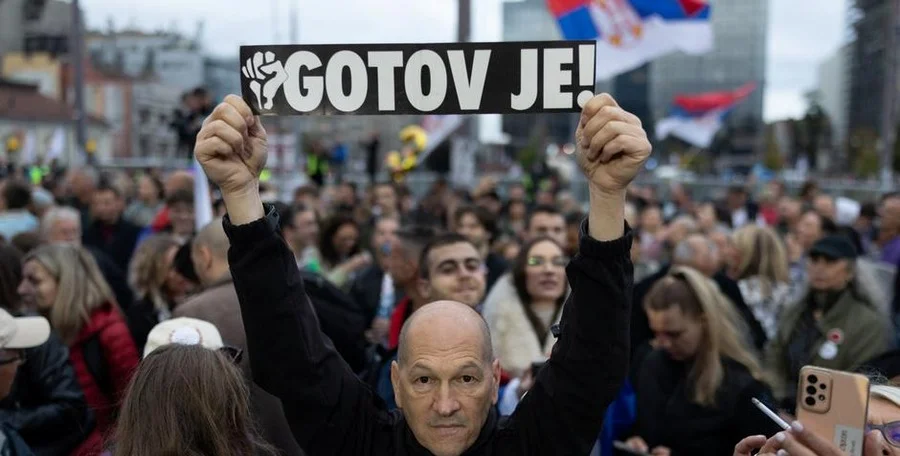
A massive rally by the Serbian student movement drew an estimated 150,000 people in Belgrade on Thursday. This final campaign event preceded a pivotal election. Observers describe the vote as a referendum on populist strongman Aleksandar Vucic.
Crowds converged on Belgrade’s central square. They filled several blocks. Optimistic supporters chanted “victory” ahead of Sunday’s crucial ballot.
These elections follow two years of student-led protests. A tragic 2024 incident triggered the unrest. A canopy collapse at Novi Sad railway station killed 16 people.
The anti-corruption movement began with calls for an independent investigation. It quickly escalated into demands for early elections. The “Student List,” a leaderless group of student-backed candidates, now leads this charge.
“Young people finally gave me hope,” said Marija Nedeljkovic Radic, 47. She expressed belief in a “normal country” for the first time. Professor Jugoslav Gasic, a Student List candidate, addressed the rally. “We are putting an end to 14 years of humiliation,” he declared.
Vucic has dominated Serbian politics for over a decade, serving as prime minister or president. However, the Serbian student movement poses his party’s biggest electoral threat. His Serbian Progressive Party (SNS) came to power in 2012.
Mounting pressure from the protests led Vucic to announce snap elections last month. He recently resigned as president, a move many consider tactical. This allows him to potentially run for prime minister. Meanwhile, Vucic regularly accuses the student movement of being a foreign-funded coup. “Let us go out and defeat them!” he told his own supporters on Thursday.
Days before the vote, civil society organizations raised alarms. They warned that conditions for “free and fair elections” were lacking. Analysts also fear post-election instability from a close result. Vucic, who controls the Serbian police, has vowed to quell any unrest.
The election feels like a referendum between Vucic and the student movement. This dynamic could sideline other minor parties. It will decide representation in the 250-member parliament.