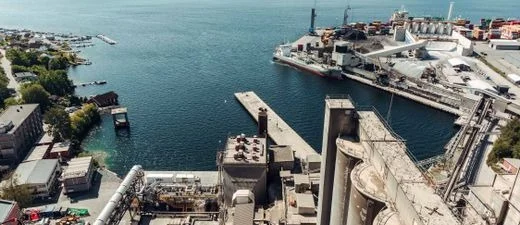
A pioneering project in Norway designed to produce climate-friendly cement is now facing significant carbon capture doubts, an international investigation has revealed. Hailed as a world-first, the facility aimed to drastically cut emissions from cement production. However, one year after its commissioning, the plant struggles to meet its environmental pledges.
Heidelberg Materials launched the industrial facility in June 2025. Company officials declared it a “historic milestone” for sustainable construction. They envisioned a “new era” for an industry known for its extremely high greenhouse gas output.
The core technology involves a specialized “absorber unit” tower. This unit captures a portion of carbon dioxide (CO2) from the cement manufacturing process. It prevents the potent greenhouse gas from escaping into the atmosphere and contributing to global warming.
Meanwhile, an analysis conducted by multiple international media partners exposes shortcomings. This detailed scrutiny shows that the cement company has not been able to deliver on its ambitious climate protection promise. The facility’s CO2 emissions remain higher than anticipated.
These findings raise serious carbon capture doubts regarding the real-world sustainability of such industrial-scale solutions. The project’s performance underlines ongoing challenges with large-scale carbon capture and storage (CCS) initiatives. Delivering on green commitments often proves more difficult than initially projected.
Therefore, this Norwegian pilot scheme highlights the complexities of decarbonizing heavy industries. Achieving genuinely climate-friendly production requires consistent innovation and effective implementation. The initial hopes for this facility have been tempered by operational realities.