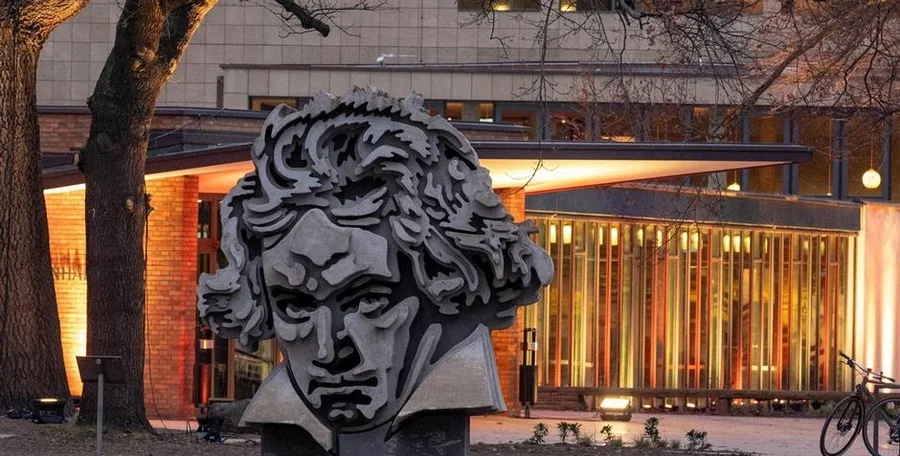
Bonn’s Beethovenfest is poised for a triumphant return in 2026, marking the grand reopening of the city’s iconic Beethovenhalle. The festival, running from September 3 to October 3, centers on the poignant motto “Home/At Home.” This theme invites musicians from diverse global cultures to present works deeply rooted in their native lands.
The newly renovated Beethovenhalle, a designated historic landmark, lay unavailable for nine years. “We now possess a large concert hall once again,” explained Philipp Seliger, spokesperson for Bonn’s Beethovenfest. He highlighted its “excellent original acoustics” and the ability to “invite major renowned orchestras” due to improved stage and infrastructure.
The festival’s opening concert on September 4 promises a magnificent auditory experience. Four trumpeters will be strategically placed throughout the hall, accompanied by organ music. Furthermore, the London Symphony Orchestra, under the baton of principal conductor Sir Antonio Pappano, performs Ludwig van Beethoven’s “Die Weihe des Hauses” and Bruckner’s Symphony No. 9. Stefan Behrisch composed “A Call to the Heavens” specifically for this year’s opening.
The revitalized venue also attracts world-class talent, including Hungarian star pianist András Schiff. Beyond acclaimed performers, the festival actively nurtures local connections. A dedicated “Festival Salon” offers a platform for local communities and bands to curate their own programs. Moreover, the “Meet your band” project provides free, accessible classical music experiences for new audiences.
The festival’s reach extends into local neighborhoods. For over a year, Juri de Marco and the “Community Choir” have inspired residents to engage in singing and improvisation, regardless of musical literacy. Festival director Steven Walter, who has lived globally, views home as a feeling rather than a fixed place. “It’s where you can rely on a genuine social network,” he observed, emphasizing the importance of social connections for well-being.
Next year marks the 200th anniversary of Beethoven’s death. To commemorate this, pianist Kit Armstrong and conductor Jan Caeyers, with his orchestra “Le Concert Olympique,” launch “Beethoven 27.” This ambitious cycle features nine concerts, offering fresh interpretations of Beethoven’s nine symphonies, sonatas, and piano concertos. The first three performances debut at this year’s Beethovenfest.
Caeyers, an acclaimed Beethoven biographer and musicologist, remains captivated by the composer. “New and unexpected doors open every time I immerse myself in Beethoven,” he shared. Armstrong echoed this sentiment, noting “countless images and perspectives” of Beethoven that continue to evolve. These varied viewpoints, he suggests, should inform contemporary musical interpretations.
This year’s artists will introduce music from their homelands, enriching the festival’s “Home” theme. Senegalese kora player Momi Maiga and Palestinian-Syrian pianist Aeham Ahmad, renowned for performing amidst conflict, are featured. Georgian violinist Lisa Batiashvili serves as this year’s artist in residence, presenting works from her homeland with the Dresden Philharmonic in a tribute program titled “City Lights.”
The festival’s enduring “Campus” youth exchange program fosters collaboration between young Georgian and German musicians. They will perform Beethoven’s compositions alongside leading Georgian works. The combined ensemble also presents Heinrich Schütz’s motet “Verleih uns Frieden gnädiglich.” This project explores the identity of young artists in a politically dynamic Georgia.
Seventeen-year-old Georgian composer and pianist Tsotne Zedginidze, considered an extraordinary young talent, received a commission for the Campus project’s new work. Furthermore, the festival embraces musical fusion and innovative ideas. Kora player Momi Maiga will improvise on Beethoven’s music with the string orchestra “Ensemble Resonanz.” American composer Brittany J. Green will explore artificial intelligence and visual effects in her piece “gLitchED dreams//invisible BEINGS,” performed with the music collective “Alarm Will Sound.” “We’re looking for the Beethovens of our time,” Seliger affirmed, “including people who aren’t necessarily composers of classical music.”